Range versus Series
When I first began the Jigasaurus adventure in 2008, I had not really considered how to categorise the puzzles it would come to include.
I knew from the off that there would be records of all the various puzzles, along with information about their respective manufacturers, but soon realised that other classifications could be applied in order to make for a more meaningful structure.
It was clear that some manufacturers routinely created sets, or "Series" of puzzles. Prime example of these might include the "GWR", "Cunard" and "Dunlop" series of Chad Valley, along with such sets as those of Raphael Tuck's "Dickens Coaching Scenes".
In addition to the above type of classification heading, it was also clear that some manufacturers had very different styles in which they manufactured and packaged their products. Raphael Tuck were again very forward in their marketing of such variations, producing considerable volumes of material to promote these different lines. "Zag-Zaw", "Crazy-Cut", "Tippe-Toppe" and "Jazz" are those which I have identified so far. I have elected to classify such style variations as being "Ranges".
In the "All Tags Page", found within the "Custom Views" box, which shows on all pages on the site, you can find the tags for both Range and Series. By clicking on these you will be able to view all of those which I have so far identified and recorded.
There are many instances where both range and series headings will apply to a puzzle. Some obvious examples include:
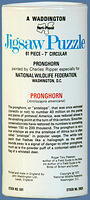
The "National Wildlife Federation" Series, found within the Waddington's "Circular" Range, or
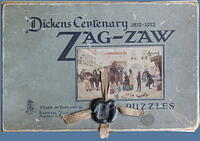
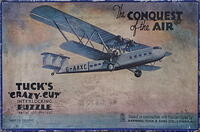
the previously mentioned "Dickens Coaching Scenes" Series, found within Raphael Tuck's popular "Zag-Zaw" Range, or their excellent "Conquest of the Air" Series from their "Crazy-Cut" Range.
I knew from the off that there would be records of all the various puzzles, along with information about their respective manufacturers, but soon realised that other classifications could be applied in order to make for a more meaningful structure.
It was clear that some manufacturers routinely created sets, or "Series" of puzzles. Prime example of these might include the "GWR", "Cunard" and "Dunlop" series of Chad Valley, along with such sets as those of Raphael Tuck's "Dickens Coaching Scenes".
In addition to the above type of classification heading, it was also clear that some manufacturers had very different styles in which they manufactured and packaged their products. Raphael Tuck were again very forward in their marketing of such variations, producing considerable volumes of material to promote these different lines. "Zag-Zaw", "Crazy-Cut", "Tippe-Toppe" and "Jazz" are those which I have identified so far. I have elected to classify such style variations as being "Ranges".
In the "All Tags Page", found within the "Custom Views" box, which shows on all pages on the site, you can find the tags for both Range and Series. By clicking on these you will be able to view all of those which I have so far identified and recorded.
There are many instances where both range and series headings will apply to a puzzle. Some obvious examples include:
The "National Wildlife Federation" Series, found within the Waddington's "Circular" Range, or
the previously mentioned "Dickens Coaching Scenes" Series, found within Raphael Tuck's popular "Zag-Zaw" Range, or their excellent "Conquest of the Air" Series from their "Crazy-Cut" Range.


© 2008-2025 David Shearer
Album info
Album Tree
Random image